A morning routine without your phone that sticks
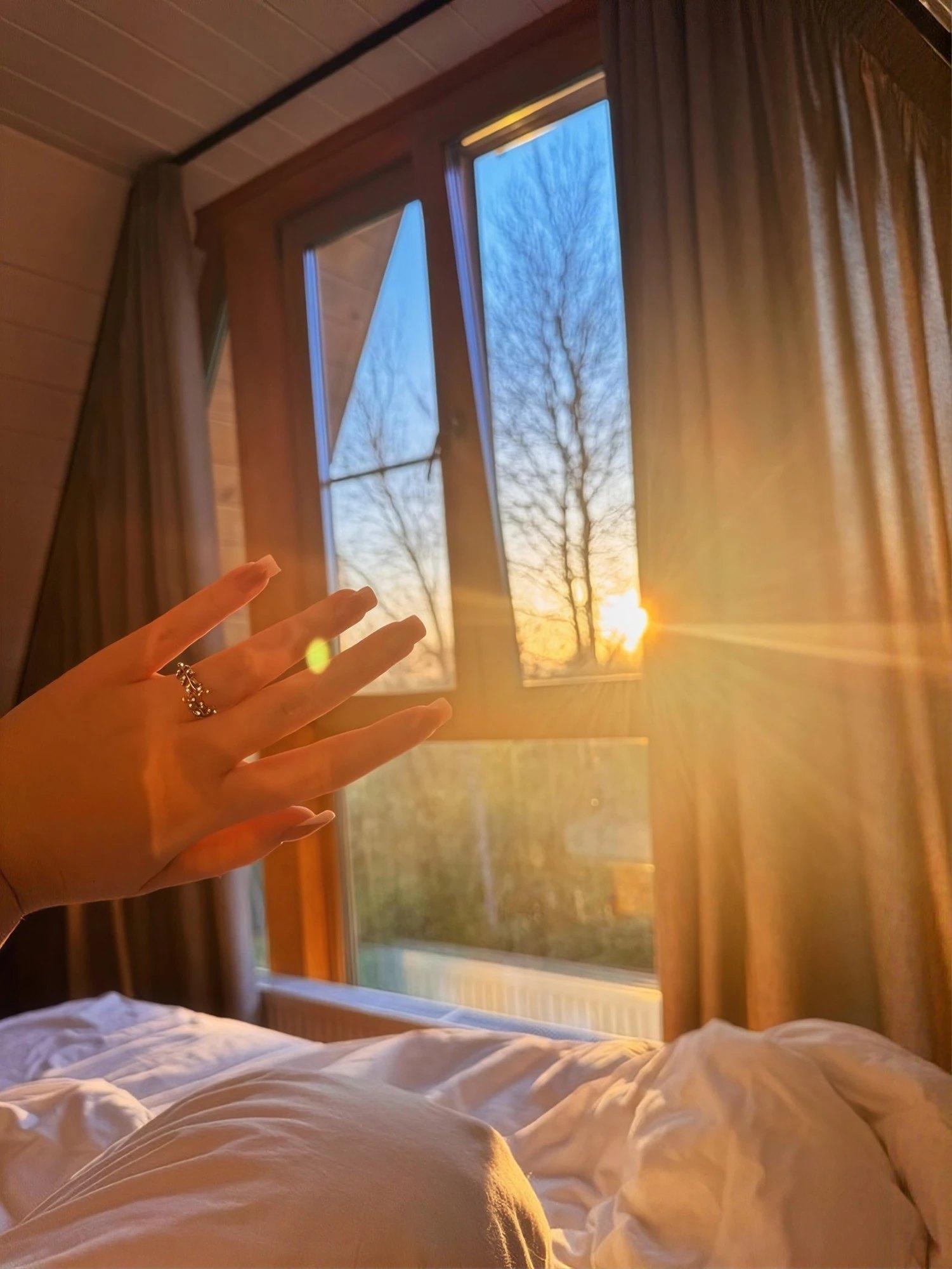
A morning routine without your phone comes down to two decisions you make the night before: where your phone sleeps, and what you'll do first instead of reaching for it. Charge it outside your bedroom, use a cheap alarm clock, and give yourself a short list for the first 20 to 30 minutes: open the curtains, drink a glass of water, move a little, make your bed, make coffee slowly, then read or journal. It works with a normal wake-up time, no 5am alarm or ice bath required.
If your hand finds your phone before your eyes are fully open, you're in good company. In a 2018 Pew Research Center survey, 72% of US teens said they at least sometimes check for messages or notifications as soon as they wake up, and 44% said they do it often. Those teens are in their twenties now. In a 2024 Pew survey, 72% of teens said being without their phone at least sometimes makes them feel peaceful. Plenty of people already feel the difference when the phone isn't there. Getting there on a random Tuesday is harder.
What the research says (and what it doesn't)
You'll see a lot of confident claims about morning scrolling "spiking your cortisol" or "frying your dopamine." We couldn't find good studies testing those claims for phone checks right after waking, so they aren't in this post.
What there is evidence for is the bedroom phone. In a 2018 study in Computers in Human Behavior, 95 people split into two groups, and the ones who kept their phones out of the bedroom for a week reported small improvements in happiness and quality of life, plus lower scores on a smartphone addiction scale. In a 2020 randomized pilot trial, college students with poor sleep who stopped using their phones 30 minutes before bed for four weeks fell asleep faster, slept longer, and reported better sleep quality and mood than a control group. Both studies are small. Still, they point the same way: keeping some distance from your phone at night seems to help, and better nights make easier mornings.
Step one: decide where your phone sleeps
This one change does most of the work. If your phone charges on your nightstand, you're counting on yourself to say no while you're still half asleep. If it charges in the kitchen, the hallway, or across the room on your desk, scrolling in bed stops being an option.
A few things that make it easier:
- Buy a basic alarm clock or a sunrise lamp so your phone stops being your alarm.
- Put a glass of water and a book where your phone used to go, so there's still something to reach for.
- Turn on Sleep Focus. You can still let calls from favorite contacts through, so nobody is unreachable in an emergency.
- If you share a room or can't move the phone, at least put it face down somewhere you'd have to get out of bed to grab.
A phone-free morning routine, step by step
This is the full version. It takes about 30 minutes and you don't need any equipment.
Let the light in
Open the curtains, or better, stand outside for a few minutes with your coffee. Light is the main signal your body clock uses to figure out what time it is. In a 2013 study in Current Biology, eight adults spent a week camping with only sunlight and a campfire, and their internal clocks shifted about two hours earlier, closer to sunrise and sunset. A few minutes on your front step gives you a small dose of the same signal.
Drink a glass of water
You've gone a whole night without drinking anything. In a 2012 study in The Journal of Nutrition, 25 young women who were mildly dehydrated (about 1.4% of body weight, brought on by exercise) had worse mood, more headaches and a harder time concentrating, even though most of their test scores held up. A glass on your nightstand is the easiest win of the day, and it's sitting right where your phone used to be.
Move for five to ten minutes
Stretch on the floor, do a few squats, dance to one song, or walk around the block. It doesn't have to be a workout. A 2006 meta-analysis of 158 studies found that single bouts of aerobic exercise raised feelings of energy and enthusiasm, with consistently positive effects for low-intensity sessions up to about 35 minutes. The lift in mood lasted at least 30 minutes afterward, so a slow walk around the block counts.
Make your bed
It takes two minutes, and it's the first thing you finish all day. It also makes crawling back under the covers with your phone a lot less tempting. You don't need hotel corners. Pull the duvet up and throw the pillows on.
Make your coffee slowly
This is the part where you romanticize your life a little. Make the coffee, tea or matcha by hand instead of rushing it, and drink it sitting down, ideally by a window. Leave the podcast and the texts for later. If you only keep one piece of this routine, keep this one, because it's also the best anchor for building everything else (more on that below).
Read a few pages or journal
Pick one. Read five pages of an actual book, or write for five minutes. If a blank page feels like a lot, try three things you're grateful for and one thing you want to get done today. Be realistic about what this does: a 2025 meta-analysis in PNAS of 145 papers and almost 25,000 people found that gratitude exercises lead to small increases in well-being. That's a modest effect for five free minutes, and it's a nicer start than someone else's highlight reel.
The 10-minute version for busy mornings
Not every morning has 30 minutes in it. On school days, work days or late mornings, shrink it:
- Open the curtains on your way out of bed.
- Drink the water on your nightstand.
- Make your bed.
- Stretch for two minutes while the kettle boils.
- Drink your coffee before you pick up your phone.
Save the slow version, with the walk and the book, for weekends.
How to make it stick
Stack it onto something you already do
Habit stacking means tying a new habit to one you already have. Researchers call the formal version an if-then plan, and a 2006 review of 94 independent tests found that people who made these plans were more likely to reach their goals than people who only set the goal. Write yours like this:
- After I turn off my alarm, I open the curtains.
- After I drink my water, I make my bed.
- If I reach for my phone before my coffee, I go stand by the window instead.
Decide when your first phone check happens
"Not first thing" is vague. Pick a clear moment, like after your coffee, once you're dressed, or when you sit down at your desk. When you do pick it up, check messages first and open the apps you scroll later.
Give it longer than three weeks
The "21 days to form a habit" idea doesn't come from research. In a 2010 study of 96 people building a new daily habit, it took a median of 66 days for the habit to feel automatic, with a range from 18 to 254 days (the longest was a projection, since the study ran 84 days). The same study found that missing one day didn't throw people off. So if you scroll in bed on Saturday, just do the routine on Sunday.
Plan for bad mornings
You'll oversleep, or wake up stressed, or stay at a friend's place. Have a minimum you can always do, even if it's just water and opening the curtains before you look at your phone.
If your phone still wins
Some mornings your phone wins no matter where it charges. If that's you, it can help to let an app do some of the work. Aura is an iPhone app that blocks the apps you scroll too much and lets you earn time back by doing healthy habits, including a Morning check-in and photo check-ins for things like drinking water and making your bed. Each coin is one minute of screen time, and a fox you name yourself cheers you on. You can find more on how it works in the help center.
FAQ
How long should I wait before checking my phone in the morning?
There's no research-backed magic number. Start with something you can do, like 15 minutes or "after my coffee," and stretch it once that feels normal. Tying it to an event is easier to remember than a time on the clock.
What if I use my phone as my alarm?
Swap it for an alarm clock or sunrise lamp if you can. If not, charge your phone across the room so you have to get up to turn it off, then put it face down and walk away from it.
What should I do in the morning instead of scrolling?
Anything that uses your body or your hands: drink water, stretch, make your bed, make breakfast, read, journal, or step outside. We put together a longer list of things to do instead of scrolling.
Is it bad to look at your phone first thing in the morning?
It's not a moral failing, and research on morning phone checks specifically is thin. The clearer evidence is about phones in the bedroom and before bed, where keeping some distance has been linked to better sleep and well-being. A phone-free first half hour is mostly about deciding what your morning is for before your notifications decide for you.
Sources
- Pew Research Center (2018): How Teens and Parents Navigate Screen Time and Device Distractions
- Pew Research Center (2024): How Teens and Parents Approach Screen Time
- Hughes & Burke (2018): Sleeping with the frenemy: How restricting 'bedroom use' of smartphones impacts happiness and wellbeing, Computers in Human Behavior
- He et al. (2020): Restricting bedtime mobile phone use, a randomized pilot trial, PLOS ONE
- Wright et al. (2013): Entrainment of the human circadian clock to the natural light-dark cycle, Current Biology
- Armstrong et al. (2012): Mild dehydration affects mood in healthy young women, The Journal of Nutrition
- Reed & Ones (2006): The effect of acute aerobic exercise on positive activated affect: A meta-analysis, Psychology of Sport and Exercise
- Choi et al. (2025): A meta-analysis of the effectiveness of gratitude interventions on well-being across cultures, PNAS
- Gollwitzer & Sheeran (2006): Implementation intentions and goal achievement: A meta-analysis of effects and processes, Advances in Experimental Social Psychology
- Lally et al. (2010): How are habits formed: Modelling habit formation in the real world, European Journal of Social Psychology